


Dealert - Track Product Sales
3.861.00 Reviews
App Specs
- Version
- 1.5.2
- Updated On
- License
- Free
- Downloads
- 10,000+
- Developer
- Kevin Foreman
- Categories
- Shopping
- Platform
- Android
Screenshots
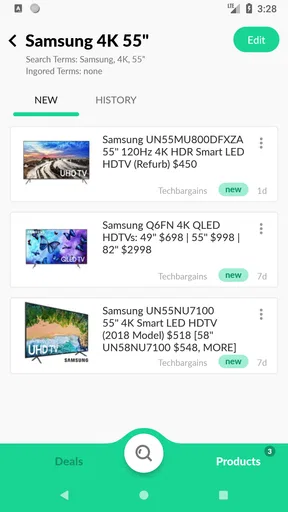
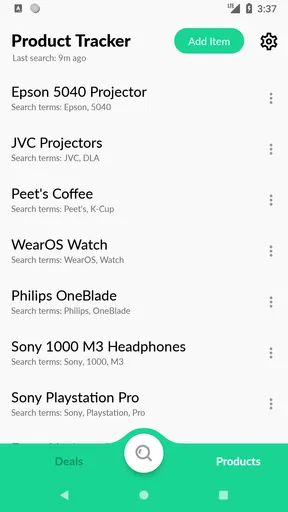
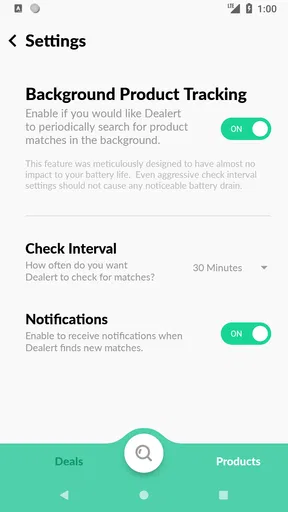
 Analysis by AppCompare
I like shopping tools that solve one narrow problem well, and Dealert - Track Product Sales is built around a useful one: keeping an eye on products whose prices may change. It is a free shopping app from Kevin Foreman, aimed at people who would rather watch a deal than repeatedly search for it. After using it, my impression is that its appeal depends less on browsing a huge catalog and more on whether you already have specific purchases in mind.
The app is listed as Dealert, while “Track Product Sales” explains the practical idea behind it. Its store summary promises that you will not miss a deal, but I found the more realistic value in treating it as a personal watchlist for planned purchases. That distinction matters. It is not automatically a replacement for every retailer app, price-comparison service, or coupon browser. It is most useful when patience can save money.
How Dealert feels in its current state
The current release is version 1.5.2, and the app supports Android 6.0 or later. That gives it a reasonably broad compatibility range for people using older Android phones, although the experience naturally depends on the device and the way the product pages or alerts behave on it. The app is free to install, with in-app purchases priced at $4.99 per item, so I would check the available purchase options inside the app before relying on it for a large shopping plan.
Its age rating is Everyone, which fits the straightforward shopping purpose. The app has reached over ten thousand installs and holds a 3.8 average from more than a hundred ratings. I read that as a sign of a useful but still fairly modest tool rather than a fully established shopping ecosystem. There is enough adoption to make it worth trying, but not enough to assume that every product, retailer, or shopping habit will fit it perfectly.
My first recommendation is to begin with one or two products you genuinely intend to buy. That gives you a practical test: can you add the item comfortably, understand what the app is tracking, and notice a useful change without creating a noisy list? Starting small is better than filling the app with impulse possibilities and then ignoring every notification.
A better fit for planned purchases
Dealert makes the most sense for things that are easy to postpone. Think of a replacement appliance, a particular accessory, a book set, a school item, or a gift you need later rather than today. If you need a product immediately, waiting for an alert defeats the purpose. If the item is available from many sellers at nearly identical prices, a normal comparison search may be quicker.
The strongest use case is a purchase with a clear identity. A specific model, size, color, or configuration is easier to monitor than a broad request such as “find me a good laptop.” This is an important trade-off: the more precise your target, the more meaningful a price change becomes. A vague shopping goal still needs human research before a tracker can help.
Worth Reading Before You Choose

Flipboard Shows What News Apps Must Do Beyond the Feed

Switching to Android Auto Means Rethinking Your Driving Routine

Google Calendar Makes a Crowded Week Easier to Manage

Ludo King Makes the Most of the Minutes Between Plans

Baby Panda World Brings Quick Play to Modern Phones, but Its Game Library Feels Busy

ESPN’s Live Game View Makes Following Close Games Easier
I also see value for people who shop around recurring events. Someone preparing for a birthday, a move, a new term, or a seasonal project can build a short list in advance instead of checking the same pages every evening. The app becomes a reminder to make a decision when the timing and price are both acceptable, rather than a reason to browse endlessly.
What I would do during an everyday shopping week
Imagine that I need a replacement kitchen item but do not need it until next month. I would first decide the exact product requirements, then add the item to Dealert rather than purchasing at the first price I see. I would keep the list limited to realistic candidates and review any change against my budget, delivery needs, and return expectations. A lower price is not automatically a better deal if shipping, seller reliability, or the wrong variation changes the total value.
That workflow reveals one of the app’s less obvious strengths: it can encourage a pause between wanting something and buying it. The tracker is not just about finding a lower number. It can act as a small decision system. I can set a target in my own mind, wait, and then judge the offer instead of treating every notification as a command to spend.
There is also a useful discipline in naming or organizing the products in a way that makes sense later. If I add several similar items, I need to remember why each one was chosen. A short note outside the app, or a clear personal rule such as “buy only below my planned limit,” prevents a watchlist from becoming a collection of forgotten links.
Where it differs from familiar shopping alternatives
A retailer’s own app is usually better for checkout, order history, delivery updates, loyalty benefits, and returns. I would use those tools when I have already chosen the store or when the purchase involves a retailer-specific promotion. Dealert is more appealing earlier in the process, when I am waiting for a suitable price and do not want to commit to one store immediately.
Price-comparison websites can be better for an immediate purchase because they show competing offers at once. They are especially useful when I care about shipping speed, seller reputation, taxes, or stock right now. A tracker takes a different approach: it favors watching a chosen product over repeatedly comparing the whole market.
Coupon apps also serve a different purpose. They may help me discover discounts across categories, while Dealert is more focused on products I have already identified. That makes it less distracting, but potentially less useful for spontaneous bargain hunting. If the fun for you is discovering unexpected deals, a deal-feed service may feel livelier. If the goal is to wait for one exact item, this app’s narrower focus is more sensible.
What the release tells me about its direction
Version 1.5.2 is the clearest current marker of the product’s evolution. It shows that the app has moved beyond its original launch in December 2018 and is still presented as an active version rather than an abandoned experiment. I would treat that as encouraging, but not as proof that every part of the shopping journey has been polished. A version number alone cannot tell me how frequently tracking works across different products or how consistently alerts arrive.
For an existing user, the practical question is not whether the number changed but whether daily tasks feel dependable. Can a saved product still be found? Is the tracked item clearly identified? Does a change make sense when I open it? Those are the details that determine whether a price tracker earns a place on my phone. I would update normally, then test one familiar item before rebuilding a large shopping workflow around the newer release.
The app’s evolution also suggests that it should be judged as a focused utility, not as a complete marketplace. The developer, Kevin Foreman, has kept the concept centered on deal tracking. That focus can be a strength because it avoids the clutter of a general shopping portal. It can also become a limitation if I expect broad product discovery, detailed seller comparisons, or a full purchase-management system.
How current users can get more from it
My first practical tip is to track the exact version of a product you would actually accept. A lower price on a different size, bundle, storage capacity, or color may not be a real saving for you. When the app presents a change, I would verify the variant before considering the alert successful. This simple check prevents the common mistake of celebrating a discount on the wrong item.
Second, I would use a short list with different levels of urgency. One group can contain items I need soon, while another can hold “nice to have” purchases. Even if Dealert does not replace my own judgment about timing, this separation helps me respond sensibly. An alert for a necessary replacement deserves faster attention than an alert for an optional upgrade.
Third, I would compare the final purchase conditions rather than the headline price. Delivery charges, availability, seller terms, and return convenience can erase a saving. A tracker can point me toward a promising moment, but it cannot make the decision for me. I see this as a key strength of the app’s limited scope: it starts the review process without pretending to replace it.
Finally, I would remove products that I no longer want. Old watch items create mental clutter and make useful changes easier to overlook. A tracker works best when the list reflects real intentions. If I decide that a product is too expensive even after a discount, or that I have found a better alternative, I would clean it out immediately.
The friction that may affect the experience
The biggest limitation is that tracking only helps when the product can be identified and followed in a meaningful way. Shopping catalogs change names, images, variations, availability, and seller information. I would not assume that every price movement represents the same item under identical conditions. Anyone who needs strict historical pricing, detailed market charts, or professional purchasing records may find a specialized service more appropriate.
There is also a human limitation: alerts can encourage unnecessary buying. “On sale” does not mean “worth owning,” and a small reduction may not justify spending at all. I would recommend setting a personal maximum before adding an item. That turns the app into a filter rather than an excuse to browse every notification.
The in-app purchase model deserves attention as well. Since individual purchases are listed at $4.99 per item, I would consider the cost in relation to the number and value of products I plan to track. For one important purchase, that may be reasonable if the potential saving is meaningful. For many low-cost items, the extra expense could reduce the benefit. This is one reason I would test the free experience and understand exactly what requires payment before committing to a broad list.
The rating of 3.8 also matches my cautious view. It is not a warning to avoid the app, but it is a reminder to approach it as a practical tool with boundaries. I would pay attention to how well it handles my own products rather than assuming that a good result with one item guarantees the same result with another.
Who should use it, and who should skip it
I would recommend Dealert to patient shoppers who already know what they want and can wait for a better opportunity. It is particularly suitable for people who forget to revisit product pages, who are planning purchases ahead of time, or who want to reduce repetitive manual checking. It can also help a careful household keep a small list of future purchases without opening several retailer apps every day.
I would be less enthusiastic for someone who needs an item today, wants the cheapest complete basket immediately, or prefers to discover deals through a broad stream of recommendations. A retailer app is better for orders and after-sales service. A comparison tool is better for scanning many sellers at once. A coupon-focused service is better for people whose main goal is finding promotional codes rather than watching selected products.
I would also skip it for a large business purchasing operation unless the app’s tracking behavior and payment structure match that workflow exactly. Businesses often need shared lists, approval steps, invoices, supplier records, and dependable reporting. Dealert’s consumer-friendly concept is more naturally suited to personal shopping decisions than to formal procurement.
What I would watch before relying on it
If I continued using the app, I would watch three things closely. First is consistency: whether tracked products remain recognizable when listings change. Second is alert usefulness: whether notifications arrive at moments that help me act rather than creating noise. Third is value: whether the saving on a purchase is large enough to justify any paid item involved.
I would also watch how the current version behaves across older supported devices. Compatibility with Android 6.0 is helpful, but a supported operating system does not guarantee identical speed or display quality on every phone. A quick personal trial is more valuable than assuming that the experience will match a newer device.
My final test would be simple. I would add a product I already understand, record the price and exact configuration for my own reference, and see whether the app helps me make a clearer decision over time. If it does, I would add more items carefully. If it merely sends me back into manual checking, I would return to a retailer or comparison service that better matches my shopping style.
Overall, I see Dealert - Track Product Sales as a focused and potentially useful shopping companion rather than a universal deal machine. Its free entry, broad Android compatibility, and simple purpose make it easy to try, while the 3.8 average suggests that expectations should stay practical. The best way to use it is as a patient watchlist, not as a substitute for checking the complete offer.
For me, the app earns a recommendation when I have a specific product, flexible timing, and a clear spending limit. It is less convincing when I need instant comparison, retailer services, or detailed pricing history. If that distinction fits your habits, Dealert can remove some of the repetitive work from waiting for a purchase to make sense. If not, a conventional shopping or comparison app will probably get you to the right checkout faster.
Pros
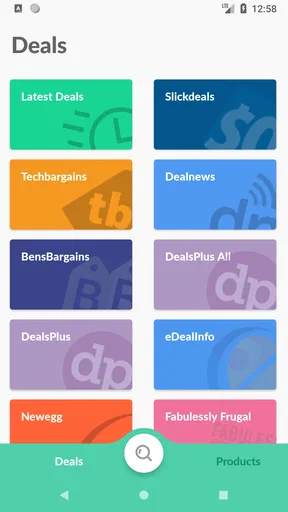
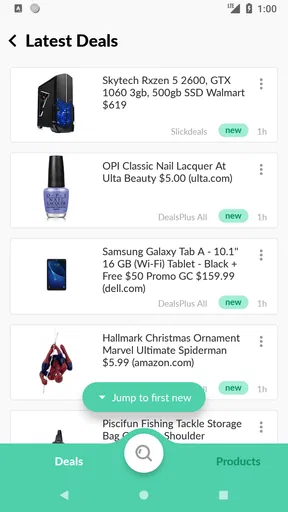
- Tracks product prices and sales in one convenient dashboard.
- Helps identify discounts and compare deals before buying.
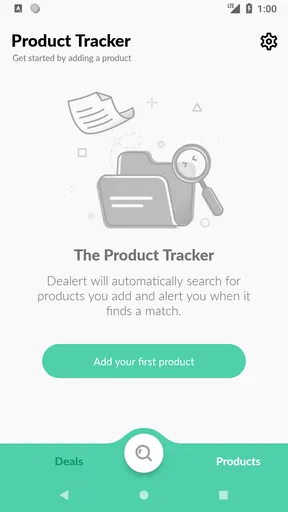
- Useful alerts can reduce the need to check stores manually.
- Clean interface makes product monitoring easy for new users.
- Can support smarter purchase timing for frequently bought items.
Cons
- Coverage may vary depending on supported stores and product categories.
- Price updates may not appear instantly for every tracked item.
- Some alerts or advanced tracking tools may require a subscription.
- Incorrect listings can occasionally lead to confusing price comparisons.
- Background notifications may affect battery life if many alerts are enabled.
FAQs for Dealert - Track Product Sales
What is Dealert - Track Product Sales used for?
Dealert - Track Product Sales is designed to help users monitor products and follow changes that may affect a purchase, such as price reductions, availability, or sales activity. It can be useful for shoppers who want to avoid checking multiple stores manually and prefer receiving organized information about products they are interested in. The exact tracking options may depend on the supported retailers, product categories, and the app’s current version.
How do I add a product to Dealert - Track Product Sales?
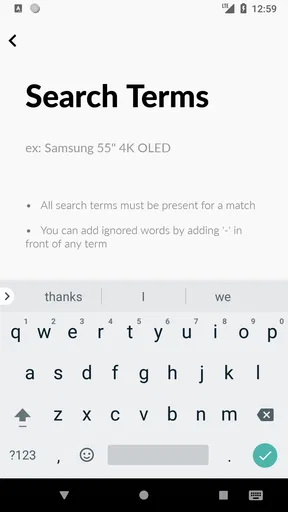
After opening the app, you generally search for a product by entering its name, brand, or another identifying detail, then select the correct listing from the available results. Once selected, you can add it to your tracked products or watchlist. Before relying on an alert, check that the product, seller, size, color, and variation are correct, because different versions of the same item may have separate prices and availability information.
Does Dealert notify me when a product goes on sale or changes price?
The main purpose of Dealert - Track Product Sales is to help users keep up with product sales and related changes, and notifications may be available for supported items. However, alerts can depend on your notification permissions, internet connection, retailer data, and how frequently product information is updated. We recommend enabling notifications in both the app and your device settings, while remembering that an alert does not guarantee that a promotion will remain available.
Is Dealert - Track Product Sales free to download and use?
The application may be available to download at no initial cost, but the complete experience can vary depending on its current business model. Some features may be free, while others could require advertising, an in-app purchase, or a subscription. Review the Google Play Store or Apple App Store listing before downloading to confirm pricing, optional premium tools, renewal terms, and whether any trial automatically changes into a paid subscription.
Is Dealert safe, and what should I check before using it?
Before using Dealert - Track Product Sales, review its official store listing, developer information, privacy policy, requested permissions, and recent user reviews. A price-tracking app may need access to notifications, network connectivity, or an account, but it should not request permissions unrelated to its purpose. Avoid entering payment details unless the transaction is handled through a trusted retailer or the official app-store payment system, and keep the app updated.


